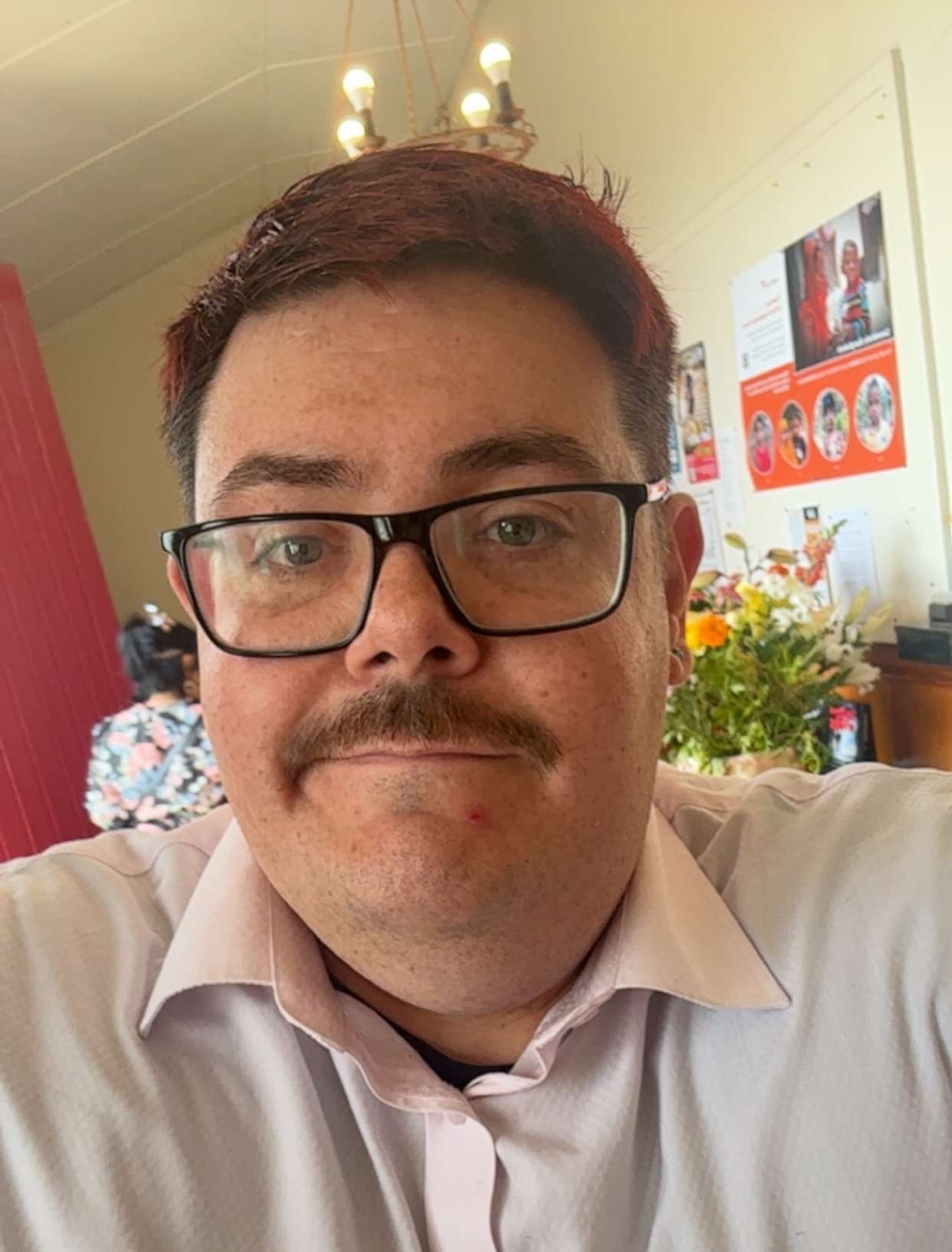
For the Loop’s latest community spotlight article, we head across the ditch to New Zealand. Living in New Zealand, Andrew was first diagnosed with Duchenne Muscular Dystrophy at three years old, but it wasn’t until he was 24, that he was officially diagnosed with Becker Muscular Dystrophy. The Loop chatted with him about friendship, hobbies, identity and what it’s like living with a neuromuscular condition.
Sometimes life can surprise us with new paths, new communities and different diagnoses!
Living in New Zealand, Andrew was first diagnosed with Duchenne Muscular Dystrophy at three years old, but it wasn’t until he was 24, that he was officially diagnosed with Becker Muscular Dystrophy.
The Loop chatted with him about friendship, hobbies, identity and what it’s like living with a neuromuscular condition.
Tell us a little bit about yourself and your disability.
I'm Andrew, 35, and I've called Dunedin, New Zealand, home for about five years now. Originally, I'm from Oamaru, about an hour and a half north of Dunedin.
I spent much of my early twenties in Christchurch, where I went to university to study primary school education. I returned home in 2013 following the Christchurch earthquakes and after withdrawing from my degree due to severe fatigue.
I came out as gay when I was 19, although I think my family and I had all known for quite some time!
I later returned to study and completed a Bachelor of Arts in Educational Psychology in 2019.
I was diagnosed with muscular dystrophy at the age of three, following a muscle biopsy after my mum raised concerns about frequent falls and me complaining of sore legs. My brother was also diagnosed a few weeks later, at 18 months old. Initially, my parents were told that we had Duchenne muscular dystrophy, and that we would likely stop walking before the age of 10 and wouldn't make it to our 21st birthdays.
For years, my birthday almost felt like a ticking clock towards something that never eventuated. When I reached my 21st, 22nd and 23rd birthdays and could still walk reasonable distances, albeit with fatigue, we started asking questions.
I eventually sought out a geneticist who had previously carried out carrier testing for my mum, aunt and nana. At 24, I discovered that I actually had Becker muscular dystrophy, and that had been the case all along!
This revelation was understandably difficult for my parents. They had spent years grieving and preparing themselves for something that was never going to eventuate. There was relief, but also a lot of confusion and understandably some difficult emotions.
Today, I'm still on my feet, walking, driving and working full-time. I lead a relatively normal life, apart from needing more naps, taking the occasional sick day and constantly managing fatigue.
You mention that you have a brother with the same condition. How has that impacted your relationship with him, and do you find it helpful having someone who understands what you're also experiencing in life?
Having a brother with the same condition can be a blessing on one hand. Having someone who understands exactly what you're experiencing, quite literally in the next room, can be incredibly helpful. It also means you can share mobility equipment (and if one of you gets tired, you can always just steal the other's wheelchair!).
As adults, we're only ever a phone call away, which is great. On the other hand, it can also be difficult, particularly when you watch them go through something you've already experienced yourself. You understand exactly what they're going through, but sometimes there's nothing you can do to make it easier.
It sounds like you have a great group of friends. How important have friendships and social connections been to you? Do you find that more of your friends have a disability or not, and how does your own disability affect that?
Social connection is incredibly important to me, and it's something I truly value. I give my all to my friendships, and some of my friends I would even consider family.
I struggled to make friends in my earlier years because of the stigma surrounding disability. Some people genuinely thought they could catch it because that's what their parents had told them!
I think there's still a lot of misunderstanding about disability, and sometimes that starts in childhood, when misconceptions are passed down from parents to children.
As an adult, I've managed to maintain friendships from almost every stage of my life: high school, university and everything in between. I have one friend, Mish, who I'd call my sister because she looks out for me like one, and another friend I know I can say absolutely anything to.
My friendship group is largely made up of people without disabilities, which I think is important to mention. Disability doesn't need to be the common ground for people to form meaningful friendships. At the end of the day, friendships are built on shared interests, trust, laughter and the connections we make with one another.
But it wasn't until I moved to Dunedin and met a few people that I really found my people. That doesn't take anything away from the other wonderful people in my life, but there's something special about having a group of people you know will be there when you need them, just as you'll be there for them.
We have game nights, quiz nights, drinks together, laugh together and occasionally have mental breakdowns together! The banter, the inside jokes and the quotes that still make me smile (Tayla, I'm talking about you) are what make it all worthwhile.
My disability does come into play sometimes, but everyone is incredibly supportive. We make plans and modify them where needed.
For example, we once did a pub crawl for a birthday. I decided that evening to walk rather than use my wheelchair. Every stop was wheelchair accessible, so I could have used it, but most of the group walked between venues. I walked where I could and used Uber when I needed to, and there were always a few others who joined me along the way.
We've also had other evenings where every location has been accessible, and it's been fantastic.
Once you find your people, anything is possible, disability or not!
What's something you wish more people understood about living with Becker muscular dystrophy?
We know our own bodies. A little push is sometimes okay, but if we say we actually need to stop, then we need to stop.
Fatigue is real. It isn't something that can simply be fixed by having an earlier night or getting a good sleep. Sometimes it can take a solid week to recover from overdoing things for just an afternoon.
I also love explaining this through the concept of Spoon Theory. It can be a really useful way of helping people understand that we have a limited amount of energy to get through the day, and that every activity comes at a cost.
How do you balance working full-time, maintaining a social life and managing your health and energy levels?
Is this a trick question?! In all seriousness, it can be done, but sometimes something has to give. There are a few things I've learnt along the way.
Firstly, your job needs to work for you and the stage of life you're at. Throughout different phases of my life, I've had quite different jobs.
I started out as a pizza delivery driver and in-store worker. That worked because the job favoured shorter shifts during peak times, meaning I could work four-hour shifts with decent breaks.
As my fatigue increased, I moved into outbound call centre work. This allowed me to sit down and work while using less physical energy, although it required more mental energy instead.
I've also had two part-time jobs at once, spreading the work across the week. I worked as a teacher aide on Monday to Thursday mornings and in administration at a kindergarten on Monday, Wednesday and Friday afternoons.
My current role as a Recovery Coordinator for ACC (the Accident Compensation Corporation, New Zealand's accident compensation scheme) is fully sedentary. This means I can work full-time while managing my energy levels.
Another important factor is having help at home. This is one area where I've had to make compromises. I do struggle with household tasks and generally aim to get them done over the weekend. Thankfully, my flatmate Harley, who is also a long-time friend, helps me with these things. It's not always without frustration on either side, but it's something I really appreciate. Accessing funded support for household assistance can be challenging when you're in full-time employment.
Socialising is something I'm also mindful of. A casual drink or a games night is great, and I fit these in when I can. My friends are understanding if I can't make something work, although I'm usually the first to say yes!
Ultimately, it's about knowing yourself and knowing your body. Sick leave and annual leave are your friends, so use them wisely and schedule them when you need them.
You talk about having help at home via your housemate. In Australia we have the NDIS, but is there something similar in NZ?
New Zealand does have support options for people living with disabilities and medical conditions, although our system is structured a little differently to Australia's NDIS.
For many of us, accessing support involves going through the Ministry of Health and a NASC (Needs Assessment and Service Coordination) provider, where your individual needs are assessed and appropriate funding or support is allocated.
There are some limitations, though. Certain supports, particularly household management and home help, are means-tested and generally require a Community Services Card, which has income eligibility criteria. Because I work, I'm generally expected to pay for these services myself unless I also require personal or attendant care.
If you qualify for personal care support, you may also become eligible for household help. At the moment, I'm still relatively self-sufficient with my personal care, although I recognise that this may change over time.
You have quite a few hobbies, from reading and crocheting to gaming and music. What do you enjoy most about them?
I have heaps of hobbies but probably not enough time to enjoy them all! Crocheting helps clear my mind, and it's something my mum shared with me, which makes it a little more special. I love listening to music in the car on my way to and from work. It always puts me in a good mood and sets the tone for the day. Gaming is something I enjoy for the strategy involved. I like having something to work through and challenge myself with.
What is one book or audiobook that you always recommend?
Anything by Patricia Cornwell or Kathy Reichs is always a good recommendation! I enjoy crime fiction, so you really can't go too wrong with either of them.
You mentioned in our emails that you're gay. How do you find being disabled in this community?
Mostly, I'd say I find it challenging. I have many friends within the LGBTQIA+ community, and it's a community I value, but I do sometimes struggle with getting people to understand my disability. I think there's an opportunity for greater understanding and inclusion around disability within the LGBTQIA+ community. We talk a lot about acceptance and diversity, but disability is another part of that conversation that deserves attention.
You mention that sometimes getting the LGBTQIA+ community to understand your disability is a struggle. Do you think this is an issue just within this community or society as a whole?
Given the struggles the LGBTQIA+ community has faced around acceptance, you might hope there would be a greater understanding of what it means to experience marginalisation in other areas of life. Unfortunately, my own experiences haven't always reflected that. I've encountered people who have simply been unwilling to understand my disability, which can be disappointing.
I don't think this is exclusive to the LGBTQIA+ community, though. I think it's a much broader societal issue. There are understanding and accepting people within the community and outside of it, just as there are people who aren't willing to make that effort.
For me, a little bit of humanity, kindness and willingness to understand goes a long way. I don't expect everyone to understand my experience, but I do hope they're willing to try. Ultimately, I want to be accepted for all of who I am, without having to leave one part of myself at the door to belong somewhere else
How does the way you identify as gay differ from or align with how you identify with your disability?
It's a complicated question! I'd say my disability doesn't define me. It simply means I sometimes need to modify certain things to make life more manageable. My sexuality is similar in that it's part of my identity, but it isn't the only part of who I am. Both are important parts of my life and experiences, but neither tells you everything you need to know about me.
What's one thing you've learnt through your own experiences that you wish you'd known earlier?
That using mobility equipment is actually freeing! For a long time, I think there's a tendency to fight against using mobility aids because you see them as a sign of losing independence or giving something up. But even something as simple as using a walking aid can completely change your day from unmanageable to manageable.
Don't fight it. Embrace it! The right equipment can give you more freedom, not less.
What is one piece of advice you'd give to both someone with a neuromuscular condition and someone who supports someone with a neuromuscular condition?
Don't ever let anyone tell you what you can or cannot achieve.
For someone living with a neuromuscular condition, you know your body better than anyone else. There will be challenges, and you may need to find different ways of doing things, but that doesn't mean you can't achieve what you set out to do.
For those supporting someone with a neuromuscular condition, listen to us, trust us and support us to find our own way. Sometimes that means helping, sometimes it means stepping back, and sometimes it simply means understanding that we need to do things differently.
A disability might change the way you do something, but it doesn't have to determine what you're capable of achieving.