You may have heard of the Social Model of Disability, which at the core is the idea that people with disability are disabled because of the environment around them (aka it’s not designed to fit their needs). In a physical sense, this may look like no elevators in multi-storey buildings, no ramps, or no dedicated wheelchair spots at events. So if this is the case, how can we all be better advocates for accessibility?
You may have heard of the Social Model of Disability, which at the core is the idea that people with disability are disabled because of the environment around them (aka it’s not designed to fit their needs). In a physical sense, this may look like no elevators in multi-storey buildings, no ramps, or no dedicated wheelchair spots at events. So if this is the case, how can we all be better advocates for accessibility?
Recognise why accessibility is important
When we think of accessibility, we may all be guilty of thinking that it is structures or processes that only help people with disabilities. However, things like easy access can assist other people in accessing the community, such as the elderly and parents with prams.
A lack of accessibility can also restrict a person’s ability to get involved in the community. This can have negative impacts on their connections with others and external activities, leading to a decrease in mental health. This makes accessibility as much of a mental issue as it is a physical one.
Lastly, when we all see accessibility, it helps to make it a more common practice. The goal is that over time, accessibility advocacy is not needed because it’s simply always considered and included. But let’s dive into what to do when it’s not.
Noticing the signs
If you’re not someone with a disability, or involved in the disabled community in some capacity, noticing what isn’t accessible and what is, isn’t necessarily something that comes naturally. So next time you’re out and about, make a conscious effort to imagine how someone in a wheelchair may navigate that space.
Some things to look out for include:
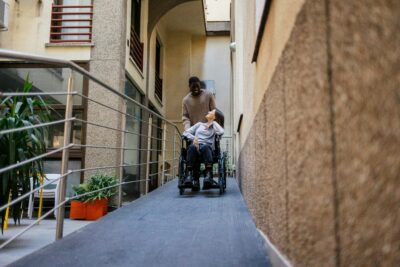
Uneven footpaths, stairs without ramps, narrow doorways
Lack of accessible toilets or parking
Poor signage or unclear entry points
Inaccessible public transport stops or stations
Temporary barriers (construction, blocked ramps)
While this article looks at physical accessibility, noticing all types of accessibility is important. But once you notice something, what do you do next?
Speaking up
Without action, nothing can change, however, the way to speak up and address the issue can vary depending on the situation.
If it is a public space (such as a park or sidewalk), this is often the responsibility of the local government, so it is best to alert the minister of that area. They are busy people though, so a reply doesn’t always happen. However, if enough people make them aware of the issue, hopefully, that will change it.
Similarly, if it is a larger issue (for example, access on airlines), this would require a conversation with not only the company but also the minister in charge, as a larger change (such as a new legislation) may be what’s needed to create change.
Say, for example, it’s a shop that has a small step. Speaking out in this regard may look like speaking to the manager/shop owner, or even writing a note (which is great if you are still learning how to advocate and are not yet comfortable doing it face-to-face or in person).
In the latter case, something like a portable ramp would be a solution to the problem, yet something that the shop owner may not have thought of (or been aware of). In this regard, advocacy is just as much about speaking up as it is educating others about the problem and the potential solutions.
Steps to being an advocate for accessibility
See the issue
Find the correct person to contact about the issue
Highlight the issue in a polite and professional manner (and if possible, present them with a solution to the issue)
Still not sure of what to do? Reach out to a person with a disability (though always keep in mind that it’s not always a disabled person’s job to educate you, and they may not have the energy or time for advocating when you reach out), watch their content or see if they have any resources available.
No matter what the advocacy looks like though, every step is a step towards making society more accessible for people with disability.